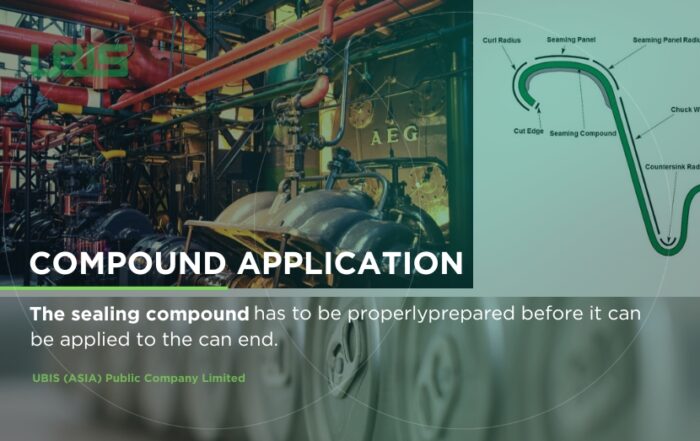
Compound Application
To create a perfect hermetic seal, choosing the right sealing compound is just the first step. The process of compound application is equally critical to ensuring a successful and secure seal. No single compound works for all types of packaging, so understanding the correct application for each is essential.
Before applying the compound, it must be prepared properly. Detailed instructions for this process are available in various training materials and manufacturer guidelines. Once prepared, the compound is ready to be applied to the can end using standard equipment.
Compound Application for Different Can Types
The method of compound application varies based on the can type.
-
Sanitary Open Top Cans: For many sanitary cans, the compound is applied in a specific sanitary open top placement. The lining begins at 0.58 mm (0-4/64”) from the cut edge and extends inward until it reaches the seaming panel radius.
-
Beer and Beverage Cans: With beer and beverage cans, the compound application is different. The compound is lined in a flat top beer or soft drink can placement, starting between 0 mm and 1.58 mm (0-4/64”) from the cut edge and extending inward to the curl height on the can end shoulder.
The amount of compound used depends on several factors, including the can end’s diameter, the type of product, the processing method, and the overall can style. For specific guidance on these parameters, consult with local experts.
One-Turn vs. Two-Turn Application
Compound application can be done in one or two turns. If a one-turn lining is done correctly, it can be just as effective as a two-turn lining. However, if the one-turn application is poor, it may result in skips, voids, or a lack of uniformity. In such cases, a two-turn application is more likely to provide a more even, reliable coating and a better hermetic seal.
Once the lining process is complete, quality checks are performed to confirm the correct film weight and ensure the compound has been applied precisely where it should be.
For water-based compounds, the lined ends must be dried in an oven before they are stored or used. For a double-seam to be created, the ends should be left for 24 to 48 hours before being seamed to the can bodies.
Summary
In summary, a successful hermetic seal relies heavily on precise compound application. This process, which varies between can types like sanitary and beverage, involves careful preparation and lining. While a single-turn application can be efficient, a two-turn method can offer greater uniformity and a better seal if needed. By following these guidelines and performing regular quality checks, manufacturers can ensure the reliability of their can seals.